Looking Up, 16-page English PDF Edition, Back Issues and Current Issue
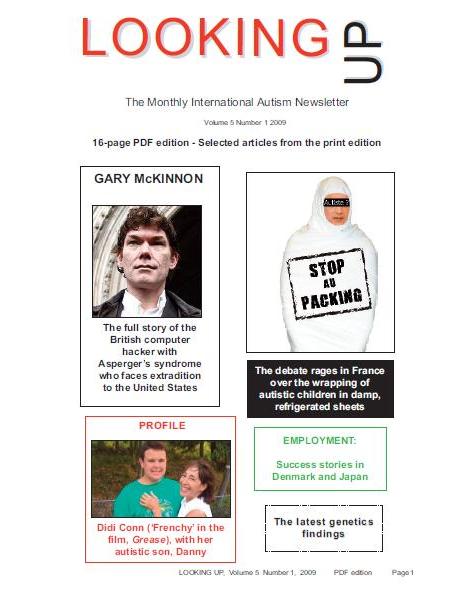
|
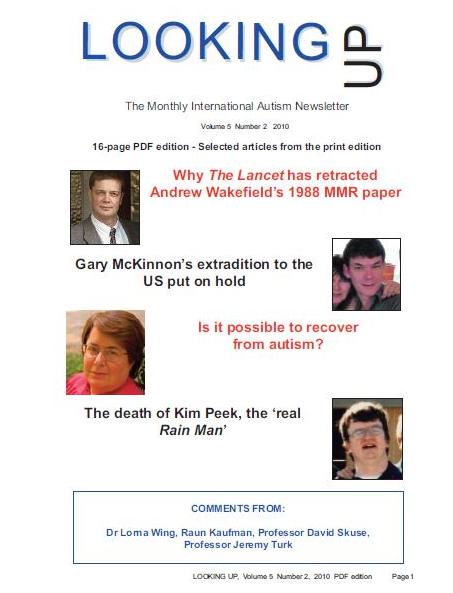
|
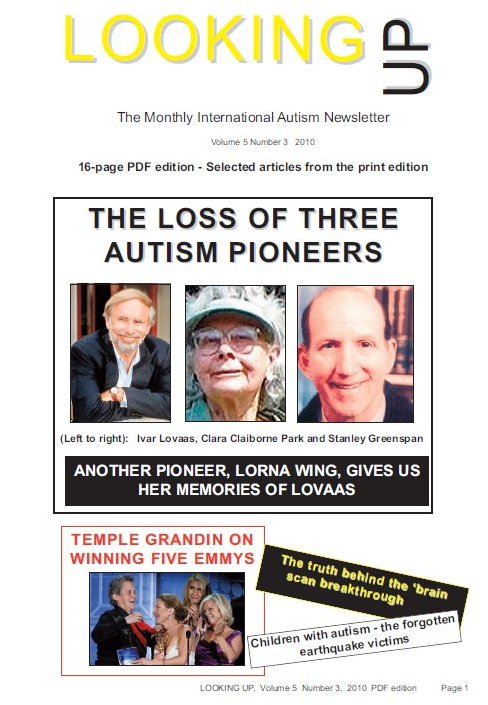
|
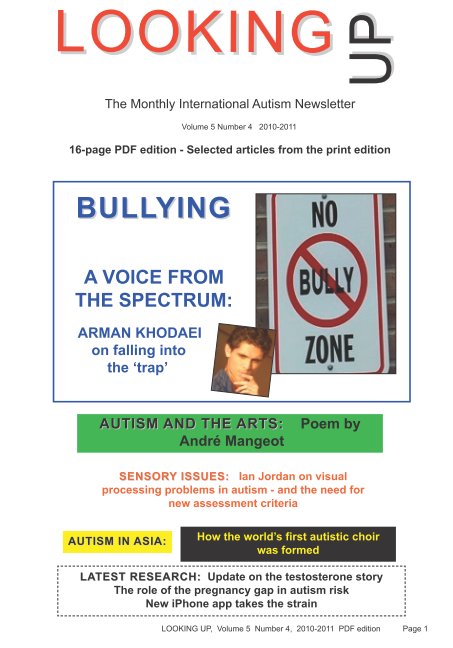
|
|
|
|
|
| Home page | Subscribe (print edition) | Selected articles | Our publications | Our mailing lists |
| PDF edition | Subscribe (PDF edition) | Back issue contents | Autism books | Contact us |
From Volume 4 Number 5
ADAM FEINSTEIN, Editor of
LOOKING UP, spoke to Professor ANTHONY MONACO, of the Wellcome Trust
Centre for Human Genetics in Oxford, UK
ADAM FEINSTEIN, Editor, LOOKING UP: What is the latest
research into possible genetic links between Smith-Lemli-Opitz syndrome
(SLOS) and autism? The reason I ask is the recent finding from the
Kennedy Krieger Institute in Baltimore, published in the American
Journal of Medical Genetics, that a small subgroup of children with
autism have abnormally low cholesterol levels. In SLOS, the body
is unable to make or process cholesterol, and the Baltimore study
authors also found evidence that the low cholesterol levels were
similarly caused by a reduced ability of the body to produce
cholesterol naturally. With this in mind, I wonder if there could be a
genetic link between Smith-Lemli-Opitz syndrome and autism in some
cases? Several studies have found that a proportion of
Smith-Lemli-Opitz syndrome sufferers also meet the criteria for autism
- although some of the symptoms are very different (SLOS is
characterised by distinctive physical features - a small head, upturned
nose, droopy eyelids, cleft palate, short thumbs, low-set ears, a
single palm crease and webbing between the second and third toes - but
also by mental retardation or learning disabilities and behavioural
problems). We know that Smith-Lemli-Opitz syndrome is caused by
mutations in the DHCR7 gene.
Professor ANTHONY MONACO, Wellcome Trust Centre for Human Genetic,
Oxford , UK: A recent publication attempted to assess the incidence of
SLOS and other sterol disorders with autism spectrum disorders (ASDs).
The study analysed blood samples of individuals with ASD for sterol
levels that would be anticipated in individuals with SLOS ...
To read the entire article you need to order this back issue
|
|
|
|
|
|
|
|
|
|
| Current 40-page print edition issue | |||||||||||||||
|---|---|---|---|---|---|---|---|---|---|---|---|---|---|---|---|
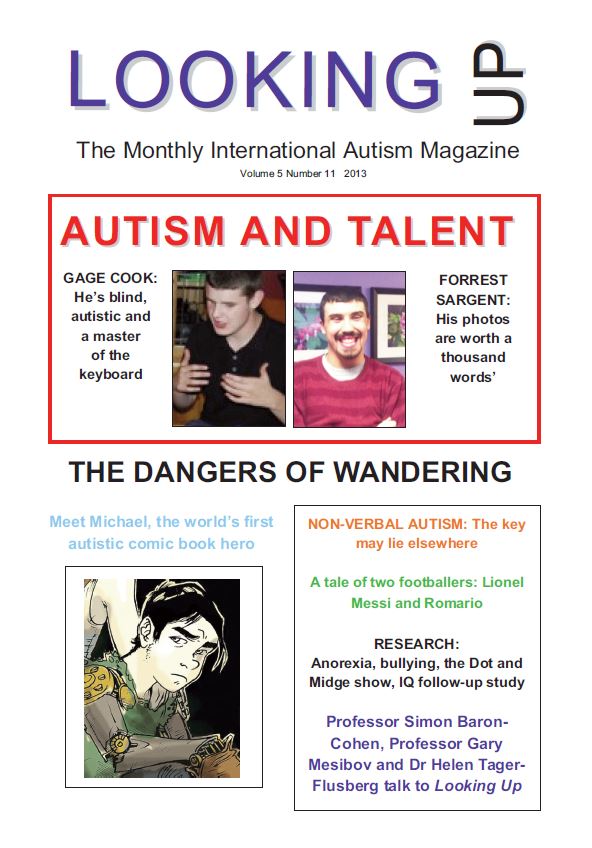
|
| ||||||||||||||
| PRINT EDITION BACK ISSUE CONTENTS AND FRONT COVERS | ||||||||||||||||||||||||||
|---|---|---|---|---|---|---|---|---|---|---|---|---|---|---|---|---|---|---|---|---|---|---|---|---|---|---|
| VOLUME 1, Number: | 1 | 2 | 3 | 4 | 5 | 6 | 7 | 8 | 9 | 10 | 11 | 12 | VOLUME 2, Number: | 1 | 2 | 3 | 4 | 5 | 6 | 7 | 8 | 9 | 10 | 11 | 12 | |
| VOLUME 3, Number: | 1 | 2 | 3 | 4 | 5 | 6 | 7 | 8 | 9 | 10 | 11 | 12 | VOLUME 4, Number: | 1 | 2 | 3 | 4 | 5 | 6 | 7 | 8 | 9 | 10 | 11 | 12 | |
| VOLUME 5, Number: | 1 | 2 | 3 | 4 | 5 | 6 | 7 | 8 | ||||||||||||||||||
| You can find our PDF EDITION CONTENTS AND COVERS on our PDF EDITION BACK ISSUES PAGE | ||||||||||||||||||||||||||
| Home page | Subscribe (print edition) | Selected articles | Our publications | Our mailing lists |
| PDF edition | Subscribe (PDF edition) | Back issue contents | Autism books | Contact us |