Michael has autism. His long-rehearsed number, along with 17 other acts, helped the children celebrate the last day of school. "I'm very proud of him," said Rose McDonough, not a family relation but his tap dance teacher at RM Productions, a studio she owns and directs. She danced the duet with Michael.
Michael's autism means he has difficulties with communication and social interaction. But tap dancing has helped him in a surprising number of ways.
He has learned how to think in patterns, remember sequences, adapt to the limelight and feel comfortable performing.
"Absolutely, it has helped him," McDonough said. "It helps communication-wise. It has improved a whole, whole lot. He's able to express himself with more confidence."
McDonough, who administers arts grants for the state, said dancing worked well as a form of therapy for people with developmental disabilities. A former Shawnee Hills "Creative Expressions" instructor, she would like to see more participation in such programmes in West Virginia.
"It really helps open them up," she said. "Dance is another form of communication."
Michael started taking tap lessons a year ago. But like most kids, he had a love-hate relationship with the demands of discipline, said his father, Steve.
But after taking a few classes, watching videos of past recitals and examining costume books, Michael's interest blossomed.
After fitting for the rented tuxedo, Michael asked if a big, black car would be calling for him, said his mother, Teresa. He also wondered if the recital audience would carry signs with his name on them.
Michael also enjoys the computer, reading, video games, swimming and spelling bees.
His autism mentor, Jeanette Higginbotham, accompanies him to Rhonda Perry's fourth-grade classroom during school, to help to direct Michael and keep him on track. An itinerant teacher, Betsy Fleshman, helps to round out his team.
Earlier the same month, Michael portrayed the fairy-tale character of Rumpelstiltskin for a class play. "He was very good," Perry said.
Michael's mother puts his relatively high degree of functioning down to intense work since his diagnosis with autism at the age of two-and-a-half.
But it helps that Michael is a bit of a ham.
"When he does a class play, he's very dramatic," says his mother. "He makes up stories. And he always does voice animations."
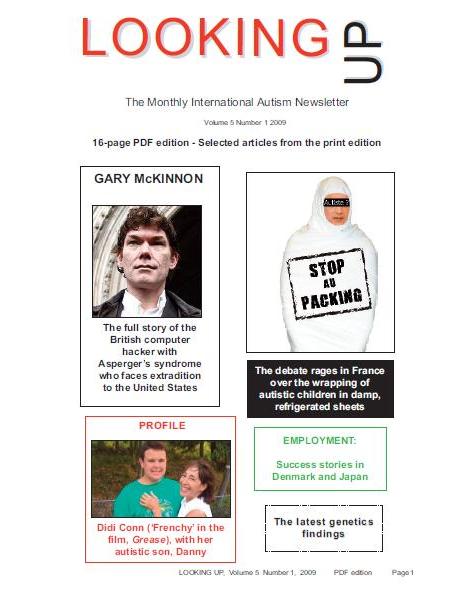
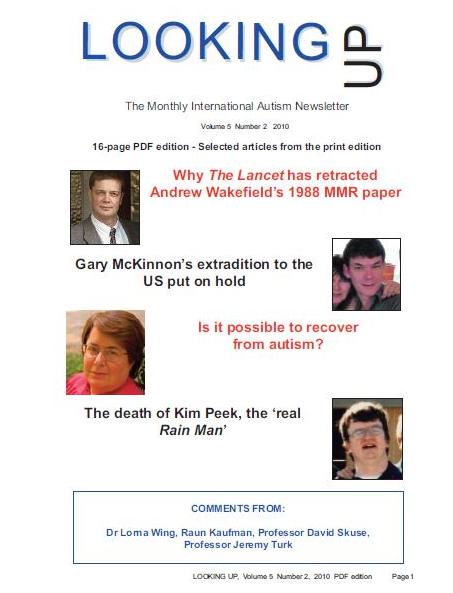
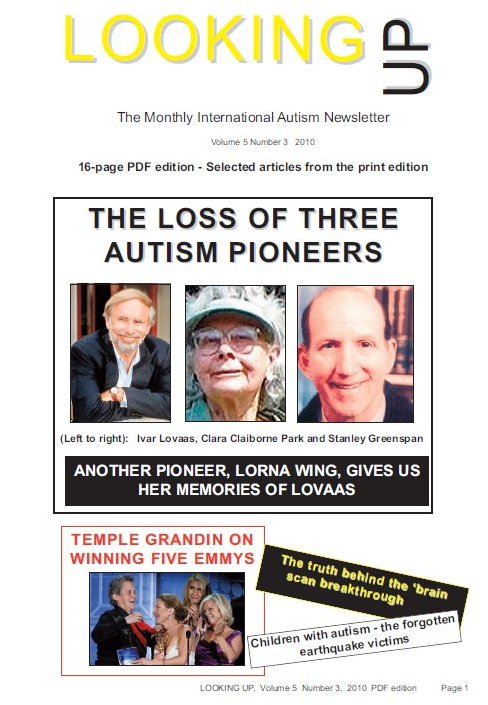
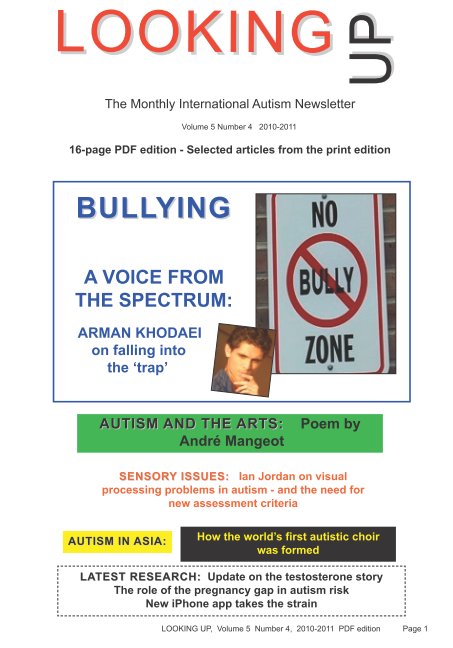
Looking Up, 16-page English PDF Edition, Back Issues and Current Issue
|
|
|
|
|
|
|
|
| Current 40-page print edition issue | |||||||||||||||
|---|---|---|---|---|---|---|---|---|---|---|---|---|---|---|---|
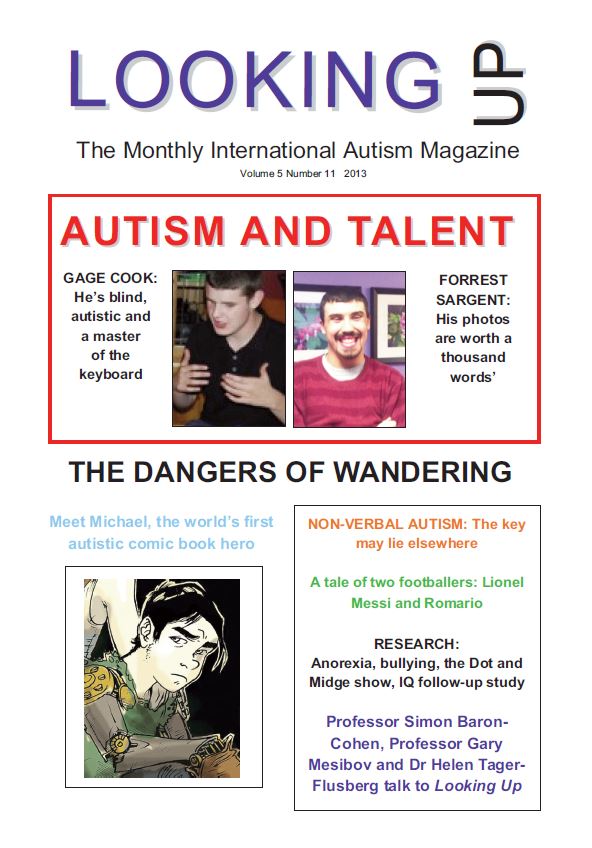
|
| ||||||||||||||
Search our autism pages
| PRINT EDITION BACK ISSUE CONTENTS AND FRONT COVERS | ||||||||||||||||||||||||||
|---|---|---|---|---|---|---|---|---|---|---|---|---|---|---|---|---|---|---|---|---|---|---|---|---|---|---|
| VOLUME 1, Number: | 1 | 2 | 3 | 4 | 5 | 6 | 7 | 8 | 9 | 10 | 11 | 12 | VOLUME 2, Number: | 1 | 2 | 3 | 4 | 5 | 6 | 7 | 8 | 9 | 10 | 11 | 12 | |
| VOLUME 3, Number: | 1 | 2 | 3 | 4 | 5 | 6 | 7 | 8 | 9 | 10 | 11 | 12 | VOLUME 4, Number: | 1 | 2 | 3 | 4 | 5 | 6 | 7 | 8 | 9 | 10 | 11 | 12 | |
| VOLUME 5, Number: | 1 | 2 | 3 | 4 | 5 | 6 | 7 | 8 | ||||||||||||||||||
| You can find our PDF EDITION CONTENTS AND COVERS on our PDF EDITION BACK ISSUES PAGE | ||||||||||||||||||||||||||
| Home page | Subscribe (print edition) | Selected articles | Our publications | Our mailing lists |
| PDF edition | Subscribe (PDF edition) | Back issue contents | Autism books | Contact us |